
Welcoming a new baby into your home brings immense joy, along with a steep learning curve regarding infant gear. Among the most common items on baby registries in the Philippines is the bouncy chair. However, many parents wonder if these popular seats are actually safe for a fragile newborn.
The short answer is yes, but only under strict, non-negotiable safety conditions. A bouncy chair for baby can be a helpful tool for soothing an awake infant, but it must never be used as a substitute for a safe sleep environment. Your baby must be fully awake, placed in the chair for limited durations, and under constant, active adult supervision at all times.
Before you ever place your newborn into a bouncy chair, your very first step must be to check the manufacturer’s product label for the specific minimum weight and age requirements. Newborns vary significantly in size and physical development, and placing a baby who is too small or too young into a seat can compromise their positioning and safety. Never assume a seat is suitable for a newborn simply because of its product name or category.
Products mentioned in this guide
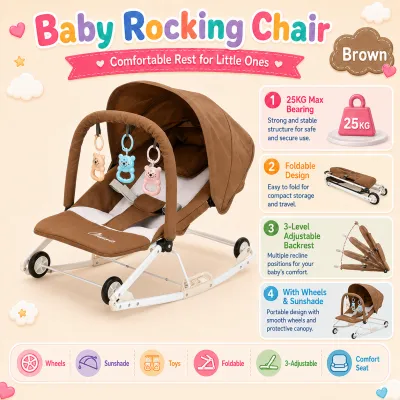
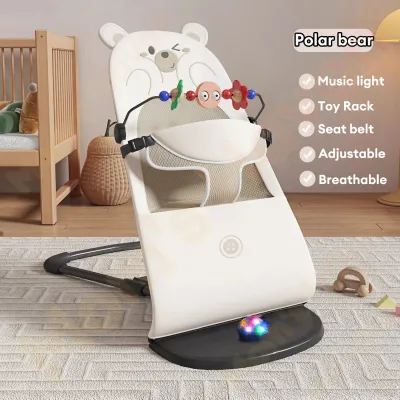
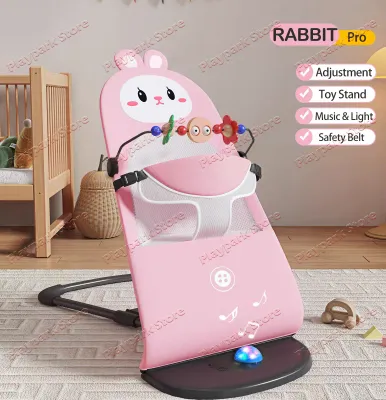
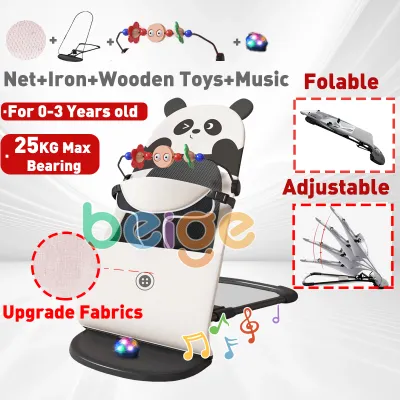
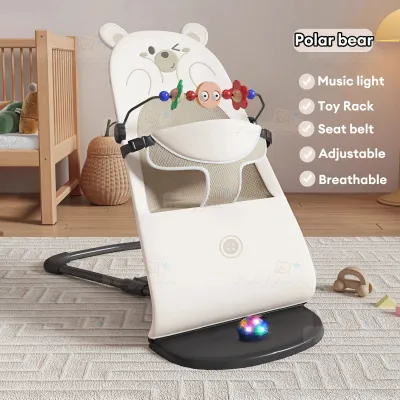
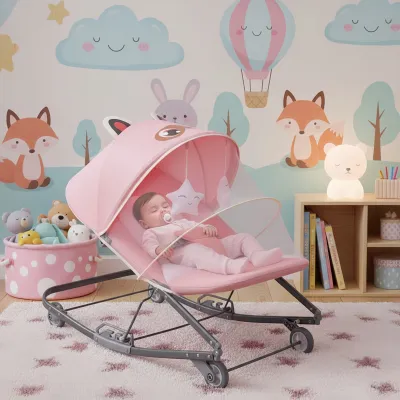
Prices are valid at publication and may change. Please refer to the product page for the latest price.
Understanding the Safety Risks for Newborns
To use infant gear safely, caregivers must understand the physiological reasons behind safety guidelines. Newborns have very specific physical limitations, including heavy heads and weak neck muscles, which make them highly vulnerable to positioning errors. In the tropical heat of the Philippines, where families often gather in living areas cooled by electric fans, it can be tempting to keep a baby in a bouncy chair nearby for hours, but understanding the underlying risks is essential to keeping them safe.
Positional Asphyxiation and Airway Risks
The most critical hazard associated with semi-reclined baby gear is positional asphyxiation. Because a newborn’s neck muscles are not yet strong enough to support the weight of their head, their head can easily droop forward if they are placed in a semi-upright or semi-reclined position. This chin-to-chest positioning can compress their soft airway, quietly restricting their oxygen supply without making any sound.
This risk increases dramatically if a baby is allowed to sleep in a bouncy chair. Unlike adults, infants cannot easily wake up or adjust their posture when their airway is compromised. Consequently, a semi-reclined bouncy chair for baby is classified strictly as an activity and soothing device, and allowing a baby to sleep in one violates basic safe-sleep practices.
Fall and Tip-Over Hazards
Another major risk involves physical trauma from falls and tip-overs. Bouncy chairs are designed exclusively for use on flat, stable floor surfaces. Placing a bouncy chair on elevated surfaces such as dining tables, kitchen countertops, beds, or sofas is extremely dangerous and must be strictly avoided.
Even though a newborn cannot yet roll or crawl, their natural, subtle movements—such as kicking their legs or startling—can cause the chair to slide, shift, or bounce across a surface. If the chair is placed on a soft surface like a mattress or sofa cushion, the uneven weight distribution can cause the chair to tip over completely, potentially trapping or suffocating the baby against the soft fabric.
Impact on Physical Development
While bouncy chairs can offer temporary relief for tired arms, overusing them can negatively impact your baby’s physical development. Spending excessive time in a restricted, semi-reclined seat limits a newborn’s ability to turn their head, stretch their limbs, and engage in the natural movements necessary for building core strength. This lack of movement can lead to delays in reaching key motor milestones like rolling and pushing up.
Additionally, prolonged pressure on the back of a newborn’s soft skull can contribute to positional plagiocephaly, commonly known as flat head syndrome. To prevent this, infants require ample opportunities for unrestricted movement on a flat surface, such as supervised tummy time on a clean play mat, which encourages healthy muscle and bone development.
Essential Safety Features to Look for in a Bouncy Chair for Baby
With a wide array of baby products available on local e-commerce platforms and in physical department stores across the Philippines, choosing the right model requires careful evaluation. Prices for these chairs can range from budget-friendly options around ₱1,200 to premium, multi-functional models costing upwards of ₱10,000. Regardless of your budget, certain safety features must be non-negotiable when selecting a bouncy chair for baby.

Harness and Restraint Systems
A secure and adjustable restraint system is the first line of defense against slips and falls. Look for a bouncy chair equipped with a sturdy three-point or five-point harness that secures the baby firmly at the crotch and waist, and ideally over the shoulders. The buckle should be easy for an adult to operate but impossible for a child to release, and the straps must be adjustable to accommodate your growing baby.
When placing your newborn in the seat, the straps must fit snugly against their body, leaving no excess slack that could allow the baby to slouch, slide downward, or slip out of the harness entirely. A loose harness can lead to dangerous positioning where the baby’s airway becomes obstructed or their limbs become tangled in the straps.
Base Stability and Weight Limits
The structural integrity of the chair’s frame is vital for preventing tip-overs. A safe bouncy chair must feature a wide, low-profile base that distributes weight evenly and resists tipping even when the baby kicks or bounces vigorously. Look for bases equipped with non-slip rubber grips or feet that prevent the chair from sliding across smooth tile or wooden floors, which are common in Filipino households.
Furthermore, you must carefully verify the manufacturer’s weight specifications. Check both the minimum weight limit to ensure your newborn is heavy enough to sit safely without slumping, and the maximum weight limit to know precisely when the chair is no longer safe to use. Never rely on general age recommendations alone, as infant weights vary widely.
Recline Angle and Head Support
Because newborns lack head control, the angle of the seat and the quality of the head support are critical design elements. Choose a bouncy chair that offers an adjustable recline, allowing you to set a flatter, more supportive angle that keeps your newborn’s head from falling forward onto their chest. The seat should support the natural curve of their spine without forcing them into an upright slouch.
The head and neck support should be firm, supportive, and securely integrated into the seat design. Avoid chairs that feature overly plush, loose, or pillow-like inserts that are not attached to the frame. These soft, pillowy materials can pose a serious suffocation hazard if the baby’s face turns into them, so any additional padding must be thin, firm, and fully approved by the manufacturer for newborn use.
Safe Usage Guidelines and When to Stop
To ensure your bouncy chair remains a helpful and safe tool in your daily routine, you must establish and follow strict usage guidelines. Implementing these rules consistently will protect your baby from common hazards while supporting their natural developmental progression.
First and foremost, enforce the “always on the floor” rule. No matter how brief the task or how flat the surface seems, never place the bouncy chair on a table, bed, chair, or countertop. Always position the chair on a flat, level floor area away from stairs, open doorways, electrical cords, and household pets.
Second, strictly limit the amount of time your baby spends in the chair. Pediatric experts generally recommend using containers like bouncy chairs for short intervals, such as 15 to 20 minutes at a time, and for no more than an hour total per day. This ensures your baby receives plenty of opportunities for active, unrestricted floor play and tummy time, which are essential for motor development.
Third, always adhere to the “awake and supervised” rule. A bouncy chair is not a passive babysitter; you must remain in the same room with your baby and keep them within your direct line of sight at all times. If you need to leave the room, even for a moment, take your baby with you or place them in a safe sleep environment like a crib or playpen.
You must also know exactly when it is time to retire the bouncy chair. Stop using the chair immediately when your baby reaches the manufacturer’s maximum weight limit, or when they hit specific developmental milestones. For example, once your baby can sit up unassisted, roll over, or begin attempting to push themselves up or climb out of the seat, the bouncy chair is no longer safe, as their increased mobility can easily cause the chair to tip over.
Finally, remember that every baby develops at their own unique pace, and some infants may have specific medical or developmental needs. Always consult your pediatrician for personalized guidance regarding your baby’s airway safety, muscle tone, and developmental readiness before introducing a bouncy chair or any other infant seat into your daily routine.
Frequently Asked Questions (FAQ)
Can a newborn sleep in a bouncy chair?
No, a newborn should never be allowed to sleep in a bouncy chair. Safe sleep guidelines dictate that infants should always sleep on their backs on a firm, flat, and level surface, such as a crib, bassinet, or play yard, free of any soft bedding, pillows, or toys. If your baby falls asleep while resting in their bouncy chair, you must immediately transfer them to a safe, flat sleep environment to prevent the risk of positional asphyxiation and sudden infant death syndrome.
Are vibrating bouncy chairs safe for newborns?
Gentle vibration features on a bouncy chair are generally considered safe for soothing an awake newborn, provided that the chair meets all structural safety standards and the baby is constantly supervised. The gentle, rhythmic motion can help calm a fussy baby, but it should never be used as a tool to lull them to sleep or as a reason to leave them unattended. Always monitor your baby closely while the vibration feature is active, and turn it off once the baby is calm or if they begin to show signs of drowsiness.

Community discussion
Share your experience or ask a question. Comments are reviewed before publication.