
Navigating infant sleep challenges can leave parents exhausted, leading many to search for gentle solutions to help their little ones rest. While the market offers various liquid formulas marketed as sleep aids, sleep drops are generally not recommended for infants without direct pediatric supervision. A baby’s developing nervous, endocrine, and digestive systems are highly sensitive to active ingredients, meaning even seemingly harmless remedies can carry hidden risks. Before introducing any drops to your baby’s bedtime routine, it is essential to understand what these products contain, how to verify their safety, and how to distinguish actual sleep aids from digestive remedies that parents often confuse with sedatives.
What Are Baby Sleep Drops and What Do They Contain?
To evaluate the safety of any liquid sleep aid, parents must first look closely at the active ingredients. These products generally fall into three categories: herbal supplements, hormonal aids, and over-the-counter medications. Herbal sleep drops often contain plant extracts such as chamomile, valerian root, lemon balm, or passionflower. While these herbs are frequently associated with relaxation in adults, their effects on infants are not widely studied. The term “natural” or “plant-based” on a label does not guarantee safety; infant digestive tracts are immature, and herbal extracts can sometimes cause allergic reactions, stomach upset, or unexpected interactions with other substances.
Hormonal sleep aids, primarily those containing melatonin, represent another category. Melatonin is a hormone naturally produced by the brain to regulate sleep-wake cycles. Introducing synthetic melatonin to an infant can disrupt their natural hormone production and developing circadian rhythms. Because of these potential long-term developmental impacts, pediatricians strongly advise against giving melatonin to babies and toddlers unless there is a diagnosed medical condition requiring it.
Products mentioned in this guide

Prices are valid at publication and may change. Please refer to the product page for the latest price.
Lastly, some over-the-counter products contain first-generation antihistamines, which have sedative side effects. Using antihistamines to induce sleep in infants is highly dangerous. These medications can cause severe adverse reactions, including respiratory depression, where a baby’s breathing slows to a dangerous level, or paradoxical excitation, which makes the baby hyperactive and highly agitated. Ingredient transparency is critical; parents must always check for hidden additives, alcohol, artificial sweeteners, or high concentrations of preservatives that could harm a developing baby.
How to Check if a Sleep Drop Is Safe for Your Infant
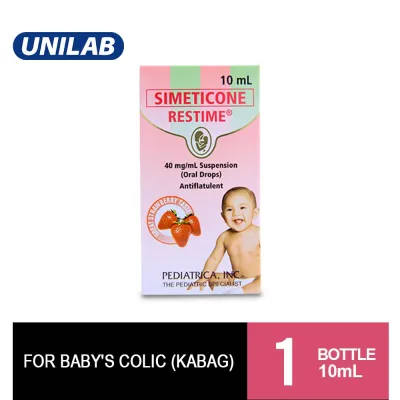
When researching sleep aids, parents frequently search for specific terms like “resttime drops for baby.” It is crucial to clarify a common point of confusion here: Restime (often searched as Resttime) is a brand of simethicone drops widely used in the Philippines. Simethicone is an anti-foaming agent designed to relieve infant colic, gas, and bloating; it is not a sedative, sleep aid, or hormone. Because gas pain and physical discomfort are primary reasons babies cry and refuse to sleep, administering simethicone drops can relieve their pain, which naturally allows them to settle down and sleep. Distinguishing between a digestive comfort drop and a chemical sleep aid is a vital safety step for every caregiver.

To verify the safety of any drop you intend to give your baby, establish a strict verification checklist. First, inspect the product packaging for explicit age and weight restrictions. Many over-the-counter sleep aids or herbal supplements are formulated for older children and are unsafe for infants under two years of age. Never guess the dosage or assume a fraction of an older child’s dose is safe for a baby.
Second, verify the regulatory status of the product. In the Philippines, safe and approved medications or supplements should be registered with the Food and Drug Administration (FDA). Look for an official registration number on the box or bottle, and cross-reference it on the official regulatory database if you are uncertain. Unregistered products imported through informal online marketplaces may bypass quality control standards, posing a risk of contamination or incorrect ingredient concentrations.
Third, look for reputable third-party testing seals on the packaging, which indicate that an independent laboratory has verified the product’s purity and ingredient levels. However, remember that a third-party seal is not a safety guarantee or a substitute for professional medical advice. Always consult your pediatrician before introducing any new supplement to your baby’s regimen.
Critical Precautions and Administration Rules for Infant Sleep Aids
If your pediatrician has evaluated your baby and explicitly recommended or prescribed a specific drop, you must follow strict administration protocols to ensure safety. The first and most important rule is to never self-prescribe or adjust doses based on online advice or parental forums. Every baby’s weight, developmental stage, and health history are unique, and only a qualified healthcare professional can determine a safe dosage.
When administering liquid drops, always use the calibrated syringe, dropper, or dosing cup that came in the original packaging. Household spoons, kitchen measuring spoons, or droppers from other medicine bottles are not standardized and can easily lead to under-dosing or a dangerous overdose. Read the increments on the dropper carefully under good lighting to ensure you have drawn the exact amount prescribed.
Never mix sleep drops or any medication into a full bottle of baby formula or breast milk unless specifically instructed to do so by your pediatrician. If your baby does not finish the entire bottle, you will have no way of knowing how much of the active ingredient they actually ingested. Additionally, mixing substances can sometimes cause chemical interactions that alter the effectiveness or safety of the drops. Administer the drops directly into the pocket of the baby’s cheek, rather than the back of the throat, to prevent choking or spitting up.
Keep a detailed log of when you administer the drops, the exact dosage given, and any observations of your baby’s behavior afterward. This log is invaluable if you need to consult your pediatrician about the product’s effectiveness or if you notice any unusual side effects. Always store the bottle securely out of reach of children, in a cool, dry place away from direct sunlight, to maintain the stability of the ingredients.
Building a Safe Sleep Routine Without Supplements
Before turning to any pharmacological or herbal sleep aids, parents should focus on optimizing natural sleep hygiene. Establishing a consistent, predictable bedtime routine is one of the most effective, risk-free ways to help an infant transition into sleep. A simple routine might include a warm bath, a gentle massage, dressing the baby in comfortable sleepwear, and reading a short book or singing a lullaby. Consistency helps signal to the baby’s developing brain that it is time to wind down.
In the tropical climate of the Philippines, physical comfort in the sleep environment plays a massive role in sleep quality. High heat and humidity can make infants extremely fussy and prevent them from settling. Ensure the nursery is well-ventilated and kept at a comfortable temperature. If you use an air conditioner, keep it at a moderate, stable setting, and ensure the airflow does not blow directly onto the crib. If using a fan, position it to circulate the air safely. Dress your baby in lightweight, breathable cotton clothing, and use a light, wearable sleep sack rather than loose blankets, which pose a suffocation hazard.
It is also important to identify and manage temporary sleep disruptors that do not require medication. Teething, growth bursts, and mild infant reflux are common developmental phases that temporarily disrupt sleep patterns. For teething discomfort, offer a clean, chilled teething ring or gently massage the baby’s gums with a clean finger. For babies experiencing mild reflux, keep them upright for 20 to 30 minutes after feeding before laying them down on their back on a firm, flat mattress. Understanding these phases can help parents provide targeted physical comfort rather than relying on sleep drops.
Warning Signs: When to Stop Use and Call a Pediatrician
Even when using a product approved by a doctor, parents must remain vigilant and monitor their baby closely for adverse reactions. Stop administering any sleep drops immediately and contact your pediatrician if you observe any red flags. These include unusual lethargy, such as a baby who is extremely difficult to wake up for scheduled feedings, or a baby who seems excessively drowsy during their normal waking hours.
Pay close attention to your baby’s breathing patterns. Any signs of respiratory distress—such as shallow breathing, rapid breathing, chest retractions (where the skin pulls in tightly around the ribs), or unusual pauses in breathing—require immediate emergency medical attention. Other warning signs include skin rashes, hives, swelling of the face or tongue, vomiting, or sudden changes in bowel movements.
In some cases, babies may experience a paradoxical reaction, becoming highly hyperactive, irritable, or unable to settle after receiving a sleep aid. If your baby’s sleep architecture worsens or if you notice a sudden decline in their feeding habits and overall responsiveness, cease using the product right away. When visiting the clinic or emergency room, always bring the exact product packaging with you so the healthcare provider can inspect the active ingredients, concentration levels, and manufacturing details.
Frequently Asked Questions (FAQ)
Can I give melatonin drops to my baby for sleep?
You should not give melatonin drops to your baby without explicit approval and guidance from a pediatrician. Melatonin is a hormone, and its effects on an infant’s developing endocrine system and natural sleep-wake cycles are not fully understood. Always check product labels for age minimums, as most melatonin supplements are formulated for older children or adults and contain concentrations that are unsafe for infants.
What should I do if I accidentally give my baby too much sleep medicine?
If you suspect or know that you have given your baby an overdose of sleep drops or any medication, act immediately. Do not wait for symptoms to appear. Contact local emergency medical services or a poison control center right away. Keep the product packaging in your hand so you can read the exact ingredients, concentration, and dosage details to the emergency responder or healthcare provider.
Community discussion
Share your experience or ask a question. Comments are reviewed before publication.