
No, anti-flathead pillows are not safe for babies to sleep on. Major pediatric and health organizations worldwide, including the World Health Organization and local pediatric associations, strongly advise against placing any pillows, head-shaping cushions, or positional wedges under an infant’s head during sleep. For babies under 12 months of age, the only recommended sleep environment is a flat, firm, and completely empty surface.
Adding any pillow to a baby’s crib introduces severe safety hazards that far outweigh any cosmetic benefits. While parents are naturally concerned about positional plagiocephaly—commonly known as flat head syndrome—introducing a sleep positioner or contoured pillow to correct this issue increases the risk of Sudden Infant Death Syndrome (SIDS) and accidental suffocation. The safety verdict from medical experts is absolute: pillows of any kind have no place in an infant’s sleep area.
Why Health Experts Warn Against Baby Sleep Pillows
To understand why health experts warn so strongly against these products, it is helpful to look at infant anatomy and physical development. Newborns and young infants have very limited neck strength and motor control. During the first few months of life, a baby cannot easily lift or turn their head if their nose or mouth becomes blocked by a soft object.
Products mentioned in this guide


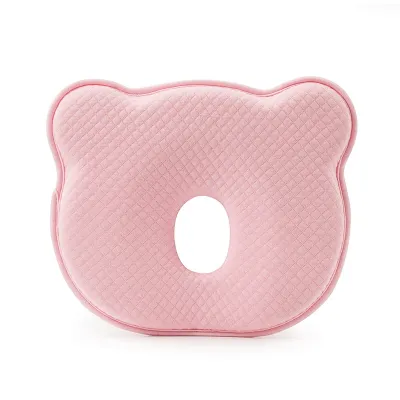
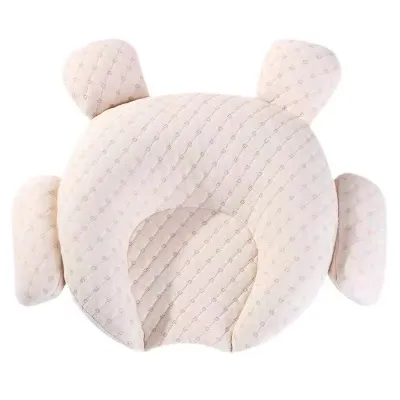



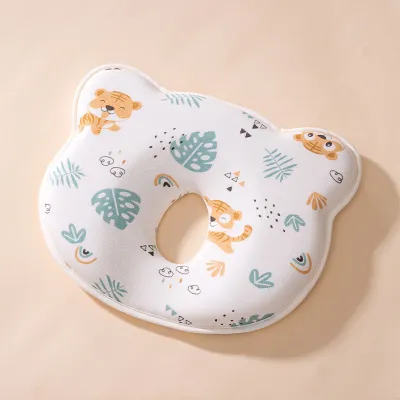
Prices are valid at publication and may change. Please refer to the product page for the latest price.
Anti-flathead pillows are typically designed with a central indentation, a hole, or raised outer edges intended to cradle the baby’s skull and distribute pressure. While this design is marketed as a way to keep the head round, it poses a major physical hazard. If a baby shifts or rolls slightly, their head can become trapped in the central dip or wedged against the raised borders. Once in this position, an infant may lack the strength to extricate themselves, leading to a high risk of suffocation.
Another critical danger is positional asphyxia, which occurs when a baby’s airway becomes physically blocked due to the position of their body. Because an infant’s head is relatively large and heavy compared to their body, placing a pillow under their head can force their neck to bend forward. This chin-to-chest position crimps the narrow, highly flexible trachea (windpipe), significantly restricting or completely cutting off their airflow. This can happen silently and quickly, without the baby showing obvious signs of struggle.
Furthermore, the soft materials used in many commercial head-shaping pillows can cause carbon dioxide rebreathing. When a baby’s face is close to a soft fabric surface, the air they exhale can become trapped in the material. The baby then breathes in this oxygen-depleted, carbon dioxide-rich air, which can lead to hypoxia and contribute directly to SIDS. Even pillows marketed as “breathable” or “mesh-ventilated” do not eliminate this physical risk, as no standard safety certification guarantees that these materials prevent suffocation in a sleeping infant.
How to Set Up a Safe Sleep Environment for Your Baby
Creating a safe sleep environment is one of the most effective ways to protect your baby during their first year of life. The core principle of infant sleep safety is often summarized as “Bare Is Best.” This means the sleeping space should contain absolutely nothing other than the baby and the essential components of a safe crib or bassinet.

The foundation of a safe crib is a firm, flat mattress that does not conform to the shape of your baby’s head or body. You can test firmness by pressing your hand down on the mattress; when you lift your hand, the surface should snap back instantly without leaving an indentation. This mattress must be covered only by a tightly fitted sheet designed specifically for that mattress model, ensuring there are no loose corners, folds, or gaps where a baby’s limbs or head could become trapped.
Keep the sleep area entirely free of soft objects and loose bedding. This means you must exclude blankets, quilts, comforters, sheepskins, stuffed toys, bumper pads, and all types of pillows, including anti-flathead positioners. If you are concerned about your baby staying warm, use a wearable blanket or a sleep sack designed for infants, which keeps their arms and legs covered without the risk of loose fabric rising up over their face.
In a warm, tropical climate like the Philippines, managing the sleep environment requires special attention to temperature and humidity. Overheating is a well-established risk factor for SIDS, and parents in warm regions sometimes mistakenly use extra pillows or soft mats to absorb sweat. Instead, dress your baby in single-layer, lightweight cotton clothing or a breathable swaddle. Keep the nursery well-ventilated using a ceiling fan or air conditioning set to a comfortable temperature, ensuring the airflow circulates throughout the room without blowing directly onto the crib.
Safe, Pillow-Free Ways to Prevent Flat Head Syndrome
It is entirely natural for parents to worry about flat spots on their baby’s skull. An infant’s skull is made up of soft, pliable bony plates connected by flexible joints called sutures, which allow the head to pass through the birth canal and accommodate rapid brain growth. Because these bones are soft, constant pressure on one part of the head—usually from lying flat on the back—can cause positional plagiocephaly. Fortunately, you can effectively prevent and manage flat spots during your baby’s awake hours using safe, evidence-based practices.
The primary strategy for preventing flat head syndrome is supervised Tummy Time. Tummy time relieves all pressure on the back of your baby’s head while actively strengthening their neck, shoulder, and upper body muscles. You can begin tummy time as soon as you bring your baby home from the hospital. Start with short, manageable sessions of 2 to 3 minutes, two to three times a day, placing your baby on their stomach on a clean, firm play mat on the floor.
As your baby grows stronger and becomes accustomed to the position, gradually increase the frequency and duration of these sessions. By the time your baby is 3 months old, aim for a total of at least 30 minutes of tummy time spread across the day. Always ensure your baby is fully awake and closely supervised by an adult during tummy time; never let a baby sleep on their stomach.
Another simple and highly effective technique is alternating your baby’s sleeping direction in their crib. Infants naturally turn their heads toward sources of interest, such as a window, a soft light, or the door where they expect you to enter. By switching the end of the crib where you place your baby’s head each night, you encourage them to turn their head in the opposite direction to look out into the room. This naturally redistributes the pressure on their skull throughout the night without the need for dangerous pillows.
During the day, minimize the time your baby spends in passive seating devices such as car seats, strollers, infant swings, and bouncers. These devices keep your baby’s head in a fixed position against a hard backing, which can exacerbate flat spots. Instead, practice upright carrying, use an ergonomic baby carrier, or hold your baby in different positions during feeding. Alternating sides during bottle feeding, just as breastfeeding mothers naturally do, also ensures that pressure is distributed evenly on both sides of the head.
When to Consult a Pediatrician About Your Baby's Head Shape
While mild flattening is common and often resolves naturally as babies learn to sit up, roll over, and crawl, there are times when professional medical evaluation is necessary. Monitoring your baby’s head shape from different angles—particularly from directly above while their hair is wet—can help you identify changes early.
You should consult your pediatrician if you notice significant, persistent flattening on one side of the head, an asymmetrical forehead, or ears that look misaligned. Another important warning sign is if your baby consistently favors looking to only one side and resists turning their head the other way. This preference can be a symptom of infant torticollis, a condition involving tight or shortened neck muscles. A pediatrician can diagnose torticollis and guide you through gentle, targeted stretching exercises to improve your baby’s range of motion.
If your pediatrician determines that the flattening is moderate to severe, they may refer you to a pediatric specialist or a physical therapist. In some cases, a custom-molded cranial remolding orthosis, commonly known as a baby helmet, may be recommended. These medical helmets are carefully engineered to redirect skull growth and are only used under strict clinical supervision, typically starting between 4 and 6 months of age when the skull is still highly responsive.
It is critical to remember that professional medical devices are highly regulated and customized to your individual child’s needs. Under no circumstances should you attempt to treat head flattening with over-the-counter sleep positioners or commercial anti-flathead pillows, as these products are not medical devices and carry severe safety risks.
Disclaimer: The information provided in this article is for educational and informational purposes only and does not constitute medical advice. Always consult a qualified pediatrician or healthcare provider with any questions you may have regarding your infant’s health, development, or sleep safety.
Frequently Asked Questions (FAQ)
At what age is it safe to introduce a pillow to a baby's crib?
Pediatric guidelines generally recommend waiting until your child is at least 12 to 18 months old before introducing a small, firm, and flat pillow to their sleep environment. Many experts advise waiting even longer, such as when they transition from a crib to a toddler bed. At this stage, their motor skills and neck strength are fully developed, which virtually eliminates the risk of accidental suffocation. However, toddlers do not actually require a pillow for comfort or spinal alignment, so there is no need to rush the transition.
Can I use an anti-flathead pillow during supervised awake time?
It is highly recommended to avoid using anti-flathead pillows even during supervised awake time. These contoured pillows restrict your baby’s natural head movement, which can actually hinder the development of their neck muscles and neck control. Rather than relying on a pillow to cradle their head, focus on active awake-time strategies such as supervised tummy time on a firm play mat, carrying your baby upright, or letting them play on their back on a flat, clear surface where they can freely look around.
Community discussion
Share your experience or ask a question. Comments are reviewed before publication.