
Quick Answer: Which Drawer Lock Mechanism Fits Your Home?
Choosing the right child lock for drawers depends on your specific living situation, furniture type, and daily habits. There is no single option that works perfectly for every home, but rather a most suitable match for your household’s unique needs.
Adhesive strap locks offer an excellent temporary solution, making them ideal for rental homes or short-term baby-proofing setups. Magnetic locks provide a completely hidden, highly convenient option for high-traffic drawers where you want to preserve your furniture’s aesthetic. Spring locks serve as a reliable, budget-friendly internal latching system that does not require an external key to operate.
Before making a purchase, always verify the manufacturer’s weight limits, recommended age ranges, and specific furniture compatibility. Taking time to assess your drawers beforehand will ensure your baby-proofing efforts are both durable and effective.
Products mentioned in this guide
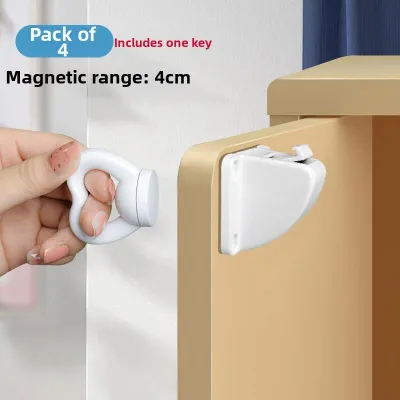
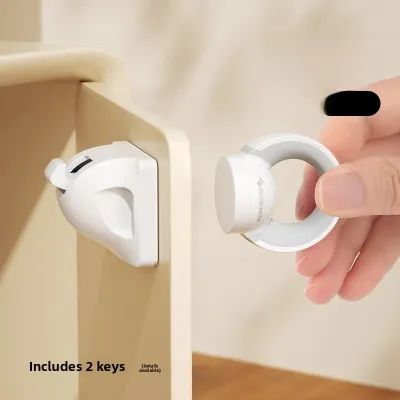
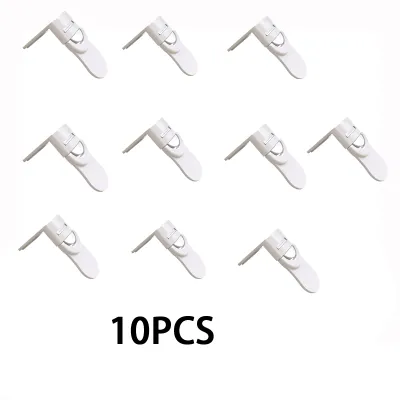
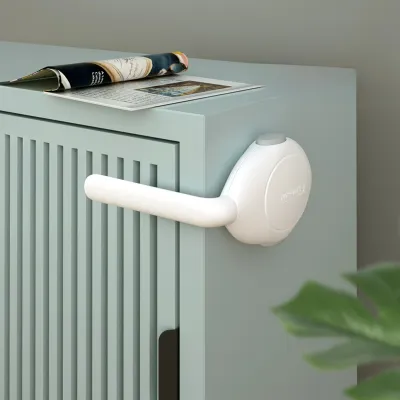
Prices are valid at publication and may change. Please refer to the product page for the latest price.
How Adhesive Strap, Magnetic, and Spring Locks Work
Understanding the physical mechanics of each lock type helps you visualize how they will function on your drawers. Each mechanism interacts differently with your furniture and requires a distinct physical action to open.

Adhesive Strap Locks
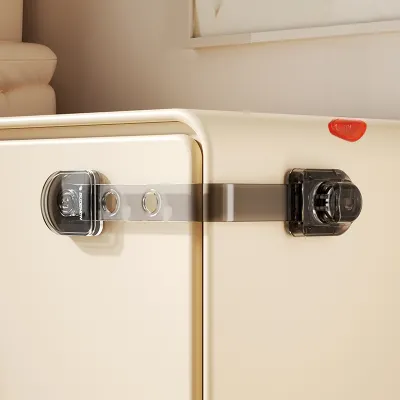
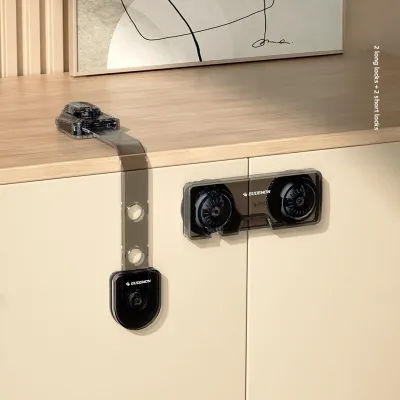
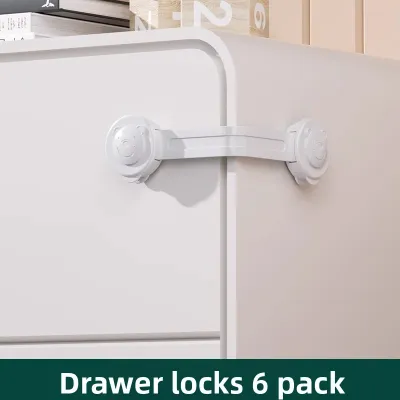
Adhesive strap locks utilize a flexible plastic or silicone strap anchored by two adhesive pads. One pad is mounted on the stationary frame of the cabinet or drawer unit, while the other is secured to the moving drawer front. To open the drawer, an adult must press a release button or slide a catch on one of the anchors, allowing the strap to peel back or swing free. This exterior design makes them highly visible but very straightforward to operate.
Magnetic Locks
Magnetic locks are installed entirely inside the drawer, keeping them completely out of sight. The system consists of an internal spring-loaded latch and a corresponding catch mounted to the inside frame. The drawer remains securely locked until you place a specialized magnetic key against the outside face of the drawer. The magnetic force penetrates the wood or laminate, pulling the internal latch down to release the mechanism.
Spring Locks (Push-Pull Latches)
Spring locks, often referred to as push-pull latches, are also mounted on the interior of the drawer. They feature a plastic hook or arm that catches on a barrier installed inside the cabinet frame. When you pull the drawer open slightly, the hook catches, stopping the drawer from opening further. To fully open it, you must reach into the narrow gap and press down on the flexible spring-loaded arm to disengage the hook.
Comparing the 3 Lock Types for Daily Use and Durability
Evaluating how these locks perform under the pressure of daily household routines is essential for long-term satisfaction. A lock that is too difficult to open may lead to frustration, while one that is too flimsy will not withstand a determined toddler.
Adult Convenience
Daily convenience is a major factor in maintaining a baby-proofed home. Adhesive straps require you to manually unlatch a physical clip every time you open the drawer, which can slow you down when multitasking. Magnetic locks offer a smooth, key-based entry, but they require you to keep the magnetic key nearby; if the key is misplaced, accessing your items becomes a challenge. Spring locks allow for quick, keyless access, but they require you to slide your fingers into a small gap and apply physical pressure, which can be tiring if done repeatedly throughout the day.
Child Resistance
Toddlers are naturally curious and highly persistent when trying to access restricted areas. Adhesive straps are fully visible, which can draw a child’s attention and lead them to tug, chew, or attempt to peel the pads off the furniture. Magnetic locks completely eliminate this visual temptation because there are no external parts for a child to grab or pull. Spring locks allow the drawer to open slightly, which might tempt a child to pull harder, but the internal latch prevents them from opening it fully unless they learn how to reach inside and press the release mechanism.
As children grow older, their problem-solving skills improve. Older siblings may quickly learn how to operate spring latches or slide open adhesive straps by watching adults. Magnetic locks remain highly secure against older children as long as the magnetic key is stored safely out of their reach.
Wear and Tear
The durability of each lock type is heavily influenced by environmental factors and frequency of use. In tropical climates with high humidity, the adhesive backing on strap locks can degrade over time, causing the anchors to peel away under constant tension. Magnetic locks do not rely on external adhesives for structural strength if they are screwed in, but the internal spring mechanism can wear down after years of constant clicking. Spring locks are made of flexible plastic that can lose its tension or snap if subjected to sudden, violent pulls by a growing child.
Furniture Compatibility and Installation Requirements
Before purchasing any baby-proofing hardware, you must assess whether your furniture can physically accommodate the locks without sustaining permanent damage.
Surface Materials
The material and finish of your drawers dictate which locks are safe to use. Adhesive straps are highly versatile and can stick to wood, laminate, metal, and glass, but the strong adhesive can strip paint or varnish from delicate wooden surfaces when removed. If you have high-value antique furniture or delicate veneers, adhesive options might not be suitable. Magnetic and spring locks are installed internally, protecting the exterior finish of your furniture, but they require mounting on solid wood or sturdy composite materials that can hold screws securely.
Clearance and Depth
Internal locks require a specific amount of physical clearance to function properly. Magnetic and spring locks need sufficient space between the top of the drawer box and the cabinet frame to accommodate the latch and catch hardware. If your drawers are shallow, have tight tolerances, or feature built-in internal organizers, there may not be enough room to mount internal latches. Adhesive straps bypass this issue entirely because they mount on the exterior, making them compatible with almost any drawer configuration.
Tool Requirements
Installation complexity varies significantly between these three options. Adhesive strap locks are completely tool-free, requiring only a clean surface and a few minutes of curing time for the adhesive to bond. Internal magnetic and spring locks often require drilling pilot holes and driving small screws into your furniture. While some magnetic locks offer adhesive installation options, screw-mounting is generally recommended for maximum durability, which means you will need a drill, screwdriver, and measuring tape to complete the setup.
Decision Framework: Which Child Lock Should You Choose?
To help you make the right choice for your home, use this structured decision framework to match your household profile with the ideal lock mechanism.
- Choose Adhesive Straps if: You live in a rental property where drilling into furniture is prohibited, you need a quick, temporary baby-proofing solution that can be installed in minutes without tools, or your drawers have unusual shapes, curved fronts, or lack the internal clearance required for hidden hardware.
- Choose Magnetic Locks if: You want to preserve the clean, uninterrupted aesthetic of your high-quality wooden furniture, you are baby-proofing high-traffic drawers where quick and smooth access is preferred, or you want a highly secure system that keeps the locking mechanism completely hidden from curious toddlers.
- Choose Spring Locks if: You prefer a cost-effective, internal solution that does not require managing an external key, your drawers have plenty of internal clearance and sturdy wooden frames that can handle screw installation, or you want a reliable backup system that remains functional even if your daily routine is hectic.
- Verify First if: Your furniture has delicate painted finishes or thin veneers that could be damaged by strong adhesives, the internal drawer clearance is sufficient to house the latch and catch hardware without jamming, or you are comfortable using basic hand tools to drill pilot holes and mount internal screws.
Safety Checks and Maintenance for Baby-Proofed Drawers
Baby-proofing is not a one-time task; it requires ongoing maintenance to ensure the safety measures you put in place remain effective as your child grows.
Routine Testing
Establish a habit of regularly testing your drawer locks to ensure they are still functioning correctly. Give each locked drawer a firm tug to check if the adhesive is lifting, the screws are loosening, or the internal latch is slipping. Over time, daily use can cause hardware to shift slightly out of alignment, which can prevent the lock from catching securely.
Choking and Pinch Hazards
Regularly inspect the physical condition of your locks to identify potential hazards. Check adhesive straps for signs of fraying, cracking, or chewing, as damaged plastic pieces can break off and pose a choking hazard. Ensure that magnetic keys are stored on a high shelf or mounted out of reach, as these strong magnets can be dangerous if swallowed. For spring locks, verify that the drawer does not open wide enough for a child to slide their fingers inside and experience a painful pinch if the drawer slams shut.
When to Replace
Be proactive about replacing worn-out baby-proofing hardware. If you notice that an adhesive strap has stretched, a magnetic latch fails to click into place, or a spring arm has lost its flexibility, replace the unit immediately. Keeping a few spare locks on hand ensures you can quickly address any failures without leaving your drawers unprotected.
Frequently Asked Questions (FAQ)
Can I use adhesive strap locks on drawers with curved handles?
Adhesive strap locks require flat, clean, and stable surfaces to establish a secure bond. If your drawer handles are highly curved, textured, or narrow, the adhesive pads will not make full contact, leading to premature failure. For drawers with complex handle designs, it is best to mount the adhesive anchors on the flat wooden surfaces adjacent to the drawer front rather than on the handles themselves.
What happens if I lose the magnetic key for my drawer locks?
If you lose your magnetic key, do not attempt to pry the drawer open with force, as this can damage the internal locking mechanism and ruin your furniture. Many manufacturers sell replacement keys separately, so keeping a spare key in a secure, separate location is highly recommended. In an emergency, you can check if a strong household magnet can temporarily release the latch, but this depends entirely on the specific design and thickness of your drawer front.
Are spring locks safe for drawers containing heavy items?
Spring locks are designed to prevent children from pulling drawers open, but they do not reinforce the structural integrity of the drawer itself. If a drawer contains heavy items like pots, pans, or tools, a child pulling hard on the handle can still cause the drawer tracks to fail or the cabinet to tip over. Always ensure your heavy furniture is securely anchored to the wall, and verify that the drawer tracks are in good condition to prevent tipping hazards.
Community discussion
Share your experience or ask a question. Comments are reviewed before publication.