
Choosing the right baby gear can feel overwhelming when your living room is already crowded with boxes and your baby is growing by the day. You do not need to buy every bouncer, swing, activity center, and walker on the market to keep your little one safe, happy, and engaged. The key to deciding which gear your baby actually needs lies in matching their current physical milestones, your household space, and your daily caregiving routine to the specific function of each item. By focusing on developmental readiness rather than age alone, you can make smart, budget-friendly choices that support your baby’s growth without cluttering your home.
Assess Your Baby's Developmental Stage
Before placing your baby in any upright or active gear, you must carefully evaluate their physical development, particularly their neck strength and trunk control. Newborns have very different physical capabilities compared to a six-month-old who can sit up independently, meaning age ranges on packaging are only general estimates.
To help you filter safe gear options, consider this checklist of developmental milestones:
Products mentioned in this guide
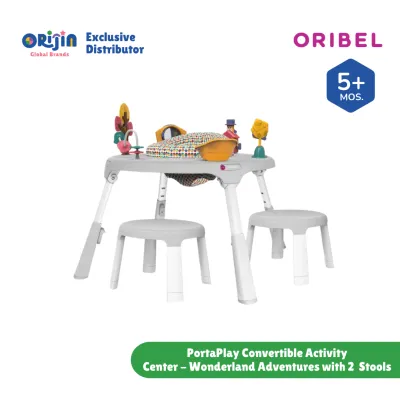
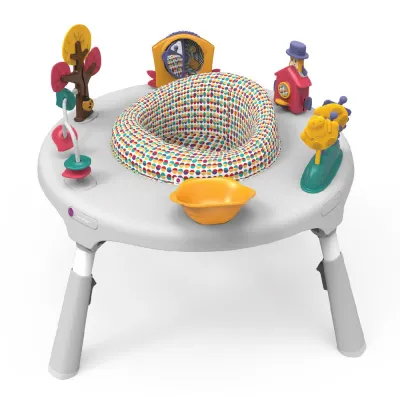
![[ONLINE EXCLUSIVE] Akeeva Luxury Activity Center (Play)](https://img.lazcdn.com/g/p/12e95002518923b530e1926899e56f2b.jpg_400x400q80.jpg_.webp)

Prices are valid at publication and may change. Please refer to the product page for the latest price.
- Newborn to 2 months: Needs full head support; gentle, reclined options are the only suitable choices.
- 3 to 4 months: Begins to hold the head up steadily during tummy time; may tolerate slight inclines under close supervision.
- 5 to 6 months: Able to sit with support or independently; shows interest in upright play and reaching for toys.
- 7 months and older: May begin pulling up to stand, cruising, or crawling; ready for more active, weight-bearing play.
Always read the manufacturer labels detailed in the product manual for specific age, weight, and height limits. Some babies outgrow gear by height long before they reach the maximum weight limit, which can compromise the safety harness or structural stability. Never infer suitability from a product name alone; verify the exact specifications before use.
Watch for clear physical signs that your baby has outgrown a piece of gear to ensure their safety. If your baby can roll over, push up on hands and knees, or sit up unassisted, it is time to transition them out of reclined bouncers and swings. For stationary activity centers, if your baby’s feet are flat on the floor even at the lowest adjustment setting, or if their chest rises above the top edge of the seat, they have outgrown the unit.
Evaluate Your Living Space and Daily Routine
In many homes in the Philippines, space is at a premium, and tropical humidity means keeping rooms well-ventilated and uncluttered is essential for comfort. Large, stationary activity centers and full-sized baby swings have a significant footprint that can easily take over a small living room or bedroom. If you have limited floor space, look for compact, foldable bouncers or multi-functional gear that can be easily tucked away when not in use.

Consider the layout of your home and your daily mobility needs. If you have tiled or smooth concrete floors, moving lightweight gear from the kitchen to the living area is relatively easy. However, if your home has multiple levels, heavy or bulky swings are difficult to transport safely. A lightweight, portable bouncer might be much more practical if you need to move your baby with you as you complete household chores in different rooms.
Think about your daily caregiving rhythm and how much hands-free time you actually need. If you are managing household tasks alone, you will occasionally need a safe, secure place to set your baby down. However, active gear should never be used as a long-term babysitter. Caregivers should limit continuous time in stationary play centers or bouncers to short intervals, allowing plenty of time for free floor play and tummy time to support natural motor development.
Compare the Core Functions of Each Gear Type
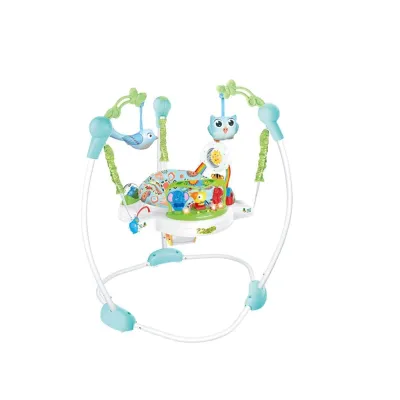
A baby activity center is designed for supported standing and interactive play, typically featuring a 360-degree rotating seat surrounded by toys. These units are excellent for babies who can sit up independently and want to look around, but they do not promote independent walking. They keep your baby upright and contained in one spot, making them a great option for busy moments when you need to keep a close eye on your child.
Bouncers rely on your baby’s natural movements or a gentle manual tap to create a soothing, up-and-down motion. They are lightweight, highly portable, and ideal for young infants who enjoy a gentle bounce while awake. Because they are low to the ground and easy to move, they fit seamlessly into smaller spaces and are perfect for keeping your baby nearby while you fold laundry or prepare a quick meal.
Swings use automated, rhythmic, side-to-side or front-to-back motion to soothe fussy babies. They are particularly helpful during the early months when infants experience crying spells or difficulty settling down. However, because they require a motor and a sturdy frame, they tend to be bulky and require access to an electrical outlet or a steady supply of batteries.
Traditional seated baby walkers are designed to allow babies to roll across the floor using their feet. However, before considering a walker, you must verify the current safety standards and pediatric guidelines in the Philippines, as many health organizations advise against their use due to safety risks. If you choose to use one, constant, active adult supervision is mandatory. Alternatively, many parents opt for stable push-walkers, which babies push from behind once they are already learning to stand and take steps independently.
Make Your Final Decision: Buy, Borrow, or Skip
Baby gear can represent a significant financial investment, with high-quality items often costing several thousand pesos (₱). To evaluate the true cost-per-use, consider how long your baby will actually use the item. A swing or bouncer might only be useful for the first four to six months, whereas a convertible activity center that transforms into a toddler play table can be used for several years, offering much better long-term value for your budget.
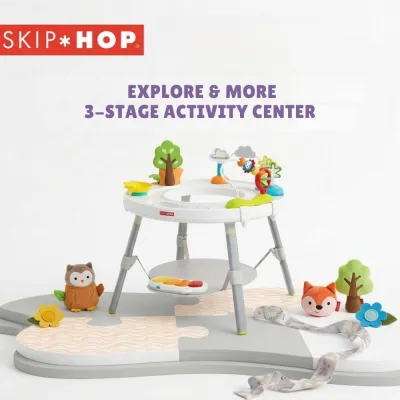
If you prefer to minimize clutter and maximize your investment, look for multi-stage or convertible gear. Some modern activity centers can be converted from a baby bouncer to a stationary activity table, and eventually into a toddler table with chairs. While these models may have a higher upfront cost in ₱, they eliminate the need to buy multiple separate items as your child grows.
Do not feel pressured to buy every item on this list. If your baby is highly active and resists being confined, they may completely reject a swing or an activity center. If your baby is already showing signs of crawling or pulling themselves up to stand, you can safely skip bouncers and swings entirely and focus on creating a safe, baby-proofed floor space for them to explore.
Frequently Asked Questions (FAQ)
Can my baby sleep in a bouncer or swing?
No, bouncers and swings are not safe environments for unsupervised sleep. You must always check the manufacturer warnings on your specific gear, which explicitly state that these products are intended for supervised awake time only. If your baby falls asleep in a bouncer or swing, the general safety rule is to immediately transfer them to a flat, firm sleep surface, such as a crib or playpen, to prevent the risk of positional asphyxiation.
Are baby walkers safe for learning to walk?
Traditional seated baby walkers are generally not recommended by pediatricians because they can actually delay natural walking development and pose significant safety hazards. Before purchasing or using one, verify the current pediatric guidelines and safety standards in the Philippines. If you want to support your baby’s walking journey, consider a stable push-walker instead, and always ensure constant adult supervision to keep your little explorer safe.
Community discussion
Share your experience or ask a question. Comments are reviewed before publication.