
Caring for a baby’s skin in a tropical climate presents unique challenges. In the Philippines, where high humidity and warm temperatures are constant, infants are particularly prone to sweat accumulation, friction, and skin irritation. Baby powder has long been a staple in local households to keep infants dry and comfortable. However, when your baby has sensitive skin, choosing the right product requires careful consideration. Not all formulations are created equal, and some ingredients can exacerbate skin issues rather than soothe them.
To make an informed decision, parents must look beyond attractive packaging and generic marketing claims. Understanding how different powder bases interact with sensitive skin, recognizing the signs of irritation, and learning how to read ingredient labels are essential steps in protecting your baby’s delicate skin barrier. This guide provides a comprehensive framework to help you evaluate, select, and safely apply gentle baby powders tailored to your child’s specific needs.
Recognizing Sensitive Skin and the Role of Baby Powder
An infant’s skin barrier is significantly thinner and more permeable than that of an adult, making it highly susceptible to environmental triggers. Sensitive skin in babies often manifests as localized redness, dry or rough patches, and tiny, raised red bumps known as heat rash or prickly heat. These issues are frequently concentrated in areas where skin folds meet, such as the neck, armpits, thighs, and diaper area. Friction from clothing, diapers, and movement can quickly turn mild irritation into painful chafing or early-stage diaper rash.
Products mentioned in this guide
![[BUY 2 FREE 2] Tender Care Classic Mild + Assorted Tender Care Baby Powder 200g Assorted Bundle of 4](https://img.lazcdn.com/g/p/ff2f989eeada22efbd30d25d0376e2e6.png_400x400q80.png_.webp)
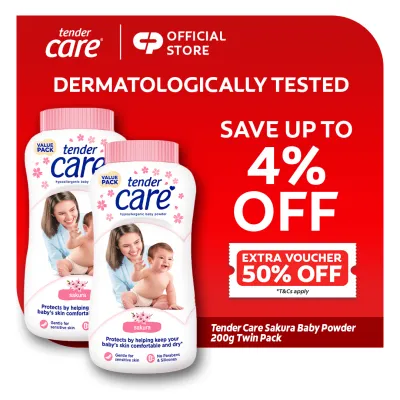
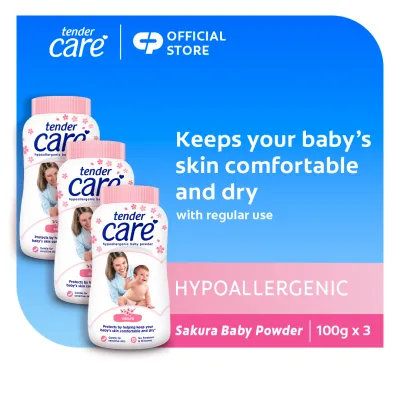
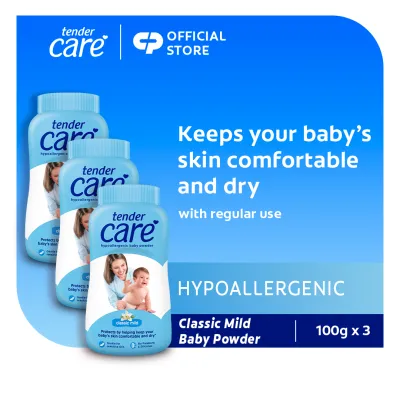
![[BUY 2 FREE 1] Tender Care Pink Soft Baby Powder - Hypoallergenic & Dermatologically Tested 100g Value Pack of 3](https://img.lazcdn.com/g/p/1a198013be52a2f9fc4725516f9fb01d.png_400x400q80.png_.webp)
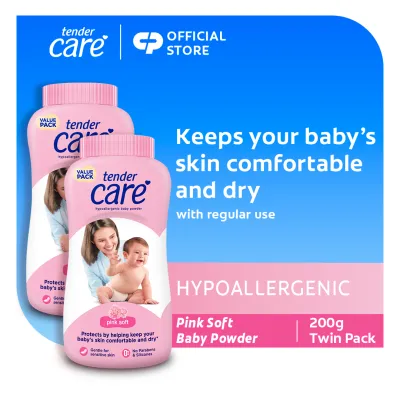
![[BUY 1 FREE 1] Tender Care Classic Mild Baby Powder - Hypoallergenic & Dermatologically Tested 200g x2](https://img.lazcdn.com/g/p/302bc979d85a5d59e97e49efef54084b.png_400x400q80.png_.webp)
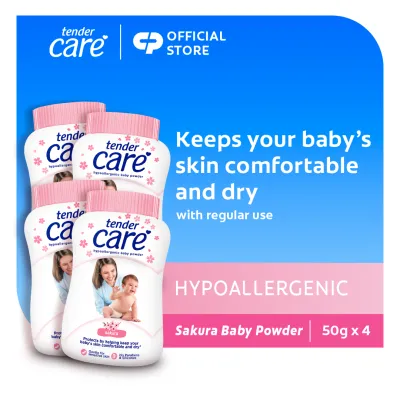
Prices are valid at publication and may change. Please refer to the product page for the latest price.
Understanding when to use baby powder—and when to avoid it—is crucial for maintaining skin health. Baby powder is primarily a preventive tool designed for moisture management and friction reduction. It works by absorbing excess sweat and creating a smooth, lubricating barrier that allows skin folds and clothing to glide over one another without causing mechanical irritation. This is particularly beneficial in warm, humid environments where sweat can pool in skin creases, leading to maceration and breakdown of the outer skin layer.
However, baby powder is not a treatment for active, damaged, or infected skin. If your baby exhibits signs of moderate to severe diaper rash, such as bright red patches, peeling, open sores, or weeping blisters, you must stop using powder immediately. Applying powder to broken skin can trap bacteria, cause severe irritation, and lead to the formation of granulomas (small areas of inflammation). In these situations, thick barrier creams, zinc oxide ointments, or professional medical treatments are required. Always consult a pediatrician if skin irritation persists, spreads, or shows signs of infection such as pus or warmth to the touch.
Evaluating Powder Bases for Sensitive Skin
The primary ingredient, or base, of a baby powder determines how it interacts with moisture and the skin barrier. When selecting a product for sensitive skin, parents should carefully evaluate the properties, benefits, and potential drawbacks of common powder bases.

Cornstarch and tapioca starch are popular plant-based alternatives to traditional mineral bases. These starches possess exceptional moisture-absorption properties, effectively soaking up sweat and keeping skin folds dry. However, in highly humid tropical climates, starch-based powders require diligent management. Because starches are organic compounds, they can serve as a food source for naturally occurring fungi, such as Candida, if they remain damp on the skin for extended periods. To mitigate this risk, parents must ensure the baby’s skin is completely clean and dry before application, and perform regular diaper changes to prevent moisture buildup.
Oat flour (often listed as colloidal oatmeal) and kaolin clay are excellent alternative bases for highly reactive skin. Colloidal oatmeal is widely recognized for its skin-soothing, anti-inflammatory properties, making it highly beneficial for babies prone to eczema or dry patches. It helps calm itching and supports the natural skin barrier. Kaolin clay, a mild and naturally occurring mineral, offers gentle moisture absorption without stripping the skin of its natural oils. It provides a silky texture that reduces friction effectively while remaining highly stable and inert on the skin.
Talc, a naturally occurring mineral composed of magnesium, silicon, and oxygen, was the standard base for baby powders for decades due to its superior ability to reduce friction and absorb moisture. However, modern pediatric safety guidelines advise caution regarding talcum powder. The primary concern is the risk of inhalation; fine talc particles can easily become airborne during application, and if inhaled by an infant, they can cause respiratory distress, chronic lung irritation, or more severe respiratory complications. Consequently, many modern “tender care” product lines have transitioned to talc-free formulations. When shopping for sensitive skin, verifying that a product is labeled talc-free is a prudent step to eliminate inhalation hazards.
Decoding "Tender Care" Labels and Safety Claims
Navigating the baby care aisle can be overwhelming, with many products displaying claims like “hypoallergenic,” “dermatologist-tested,” or “pediatrician-recommended.” While these labels suggest a high level of safety, parents must understand what they mean and how to verify them.
The term “hypoallergenic” indicates that a product has been formulated to minimize the likelihood of causing an allergic reaction. However, because this term is not strictly regulated by a single global standard, it does not guarantee absolute safety for every individual baby. “Dermatologist-tested” and “pediatrician-recommended” mean the product has undergone some level of evaluation by medical professionals, but the specifics of these tests are rarely detailed on the packaging. To verify these claims, parents should look for brands that provide transparent clinical study summaries or clear ingredient explanations on their official websites.
To protect sensitive skin, parents must learn to identify common irritants hidden in the ingredient list. Synthetic fragrances (often listed simply as “parfum” or “fragrance”) are among the most common triggers for contact dermatitis and respiratory irritation in infants. Even products marketed as “gentle” or “tender” may contain masking fragrances to cover the scent of raw ingredients. Parents should also watch out for parabens, phthalates, and harsh preservatives like formaldehyde donors, which can disrupt the delicate skin barrier. Opting for fragrance-free and minimally formulated products is the safest approach for highly reactive skin.
Additionally, look for reputable safety certifications on the packaging. In the Philippines, products registered with the Food and Drug Administration (FDA) ensure compliance with local safety and quality standards. International certifications, such as those from USDA Organic, Ecocert, or the National Eczema Association, provide further assurance that the ingredients have been rigorously screened for purity and safety. Always check the packaging for a clear manufacturer address, batch number, and expiration date to ensure product integrity.
Building a Conditional Shortlist for Your Baby's Needs
Every baby’s skin is unique, and a powder that works well for one infant may not be suitable for another. To find the right match, parents can use a conditional framework based on their baby’s specific skin profile and environmental conditions.
For babies with eczema-prone or extremely dry skin, the priority is soothing irritation and protecting a compromised skin barrier. The ideal product profile for this skin type is a fragrance-free, minimally formulated powder with a colloidal oatmeal base. Oatmeal helps lock in moisture while providing a protective layer that reduces itching. Parents should avoid any powders containing botanical extracts, essential oils, or strong starches that might dry out the skin further or trigger an allergic flare-up.
For babies who sweat heavily or live in highly humid areas, the primary goal is preventing heat rash (known locally as bungang-araw) and chafing. In this scenario, a high-absorbency plant-starch base, such as cornstarch or tapioca starch, is highly effective. These powders excel at absorbing large amounts of sweat, keeping skin folds dry and comfortable during active play or sleep. However, because starch can clump when saturated, parents must commit to frequent skin checks, wiping away damp powder residue with a soft, damp cloth, and drying the skin thoroughly before reapplying a fresh, thin layer.
For ultra-sensitive newborns, whose skin is exceptionally thin and still developing its natural defenses, the safest approach is extreme minimalism. If a powder is deemed necessary, choose a single-ingredient, pharmaceutical-grade cornstarch or kaolin clay powder that is completely free of fragrances, preservatives, and additives. Many pediatricians recommend avoiding any powders or topical products on newborns during the first few weeks of life unless specifically advised. Always consult your pediatrician before introducing a new skincare product to a newborn.
Safe Application and Storage Guidelines
Even the gentlest, highest-quality baby powder can cause adverse reactions if applied incorrectly or stored poorly. Establishing safe habits protects your baby’s respiratory health and maintains the product’s efficacy.
The most critical safety rule when using baby powder is to prevent the powder from becoming airborne near the baby’s face. Never shake or pour powder directly onto your baby’s body. Instead, step slightly away from the baby, shake a small amount of powder into your own palms, and gently rub your hands together to distribute it. Then, gently pat the powder onto the baby’s skin folds, ensuring a thin, even layer. This “pour into hands first” method minimizes the creation of a dust cloud, protecting the baby’s sensitive lungs from accidental inhalation.
Keep the powder container completely out of reach of children. Toddlers can easily open containers and shake large quantities of powder into the air, creating a severe inhalation hazard. Additionally, never apply powder to the face, nose, mouth, or directly onto the diaper area’s mucous membranes. If your baby has any broken skin, scratches, or weeping rashes, avoid applying powder to those areas entirely, as it can interfere with the natural healing process and cause localized inflammation.
Proper storage is essential to maintain the quality of baby powder, especially in the tropical climate of the Philippines. High humidity can introduce moisture into the container, leading to clumping, product degradation, and potential bacterial or fungal contamination. Always store the powder in a cool, dry place, away from direct sunlight and bathroom moisture. Ensure the lid or shaker top is tightly sealed immediately after each use to keep humidity out and preserve the powder’s smooth, dry texture.
Frequently Asked Questions (FAQ)
Can I use baby powder on a newborn's umbilical cord stump?
No, you should never apply baby powder to a newborn’s umbilical cord stump. The standard medical recommendation for umbilical cord care is to keep the area clean, dry, and exposed to air so it can heal and fall off naturally. Applying powder to the stump can trap moisture, cause irritation, and introduce foreign particles into the healing tissue, increasing the risk of infection. Parents should monitor the stump closely for signs of infection, such as redness or swelling around the base, a foul-smelling discharge, or active bleeding. If any of these signs occur, seek immediate professional medical evaluation.
Is it safe to mix baby powder with lotion or oil?
No, it is not safe to mix baby powder with lotion, baby oil, or any other liquid skincare products. Mixing powder with liquids alters the physical properties of both products, turning them into a thick, pasty residue. This paste can easily clog your baby’s pores, trap sweat against the skin, and compromise the natural skin barrier. This can lead to severe heat rash, contact dermatitis, or localized skin infections. To keep your baby’s skin healthy, apply lotion or oil separately, allow it to absorb completely, and only use powder on areas that require targeted moisture absorption and friction reduction.
How do I know if my baby is allergic to a specific powder?
You can identify an allergic reaction or sensitivity to a baby powder by observing the skin for signs of contact dermatitis. These signs include localized redness, swelling, tiny raised bumps, dry or peeling skin, or intense itching in the areas where the powder was applied. Additionally, watch for respiratory signs such as sneezing, coughing, watery eyes, or wheezing during or immediately after application, which indicate irritation from airborne particles. If you observe any of these signs, stop using the product immediately, gently wash the affected skin with mild soap and water, and consult a pediatrician for guidance on alternative skincare options.
Community discussion
Share your experience or ask a question. Comments are reviewed before publication.